Anthelmintic resistance is a widespread problem in veterinary medicine and an emerging one in human health. Most of what we know about resistance comes from Clade V nematodes, such as hookworms and Haemonchus contortus, largely because they are closely related to the model nematode Caenorhabditis elegans. However, growing evidence shows that these resistance mechanisms are not found in Clade III nematodes such as ascarids. Ascarids infect an estimated 2 billion people worldwide and are common in many veterinary species, yet little is known about their biology or how they become resistant to drugs. Our lab combines in vitro, in vivo, and genomic approaches to study ascarid biology and drug response, with the goal of improving how ascarid infections are managed and treated.
Current Research Directions:

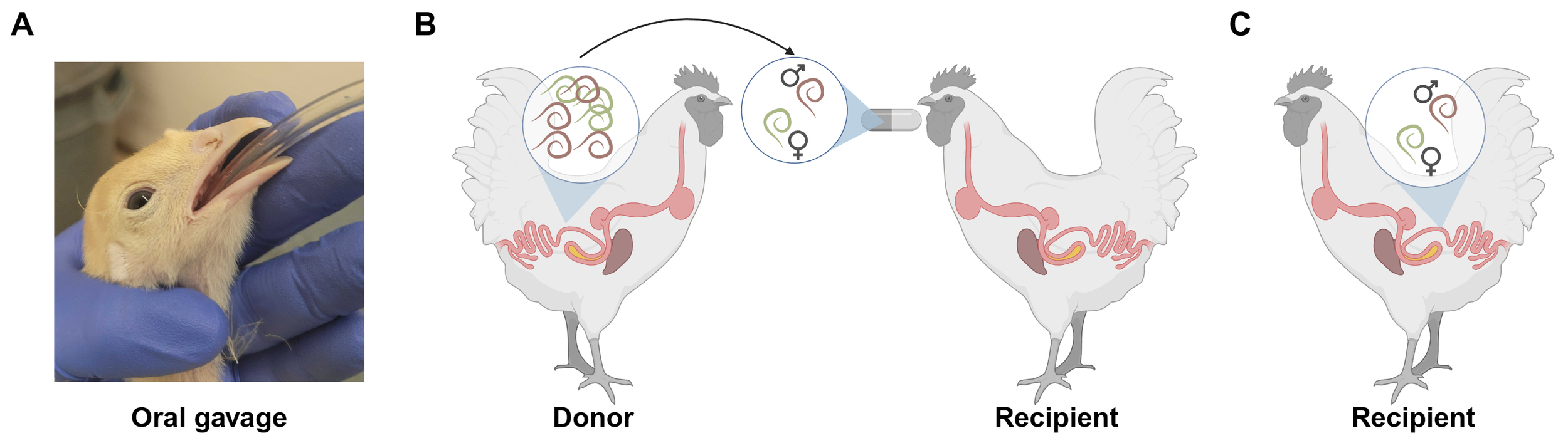
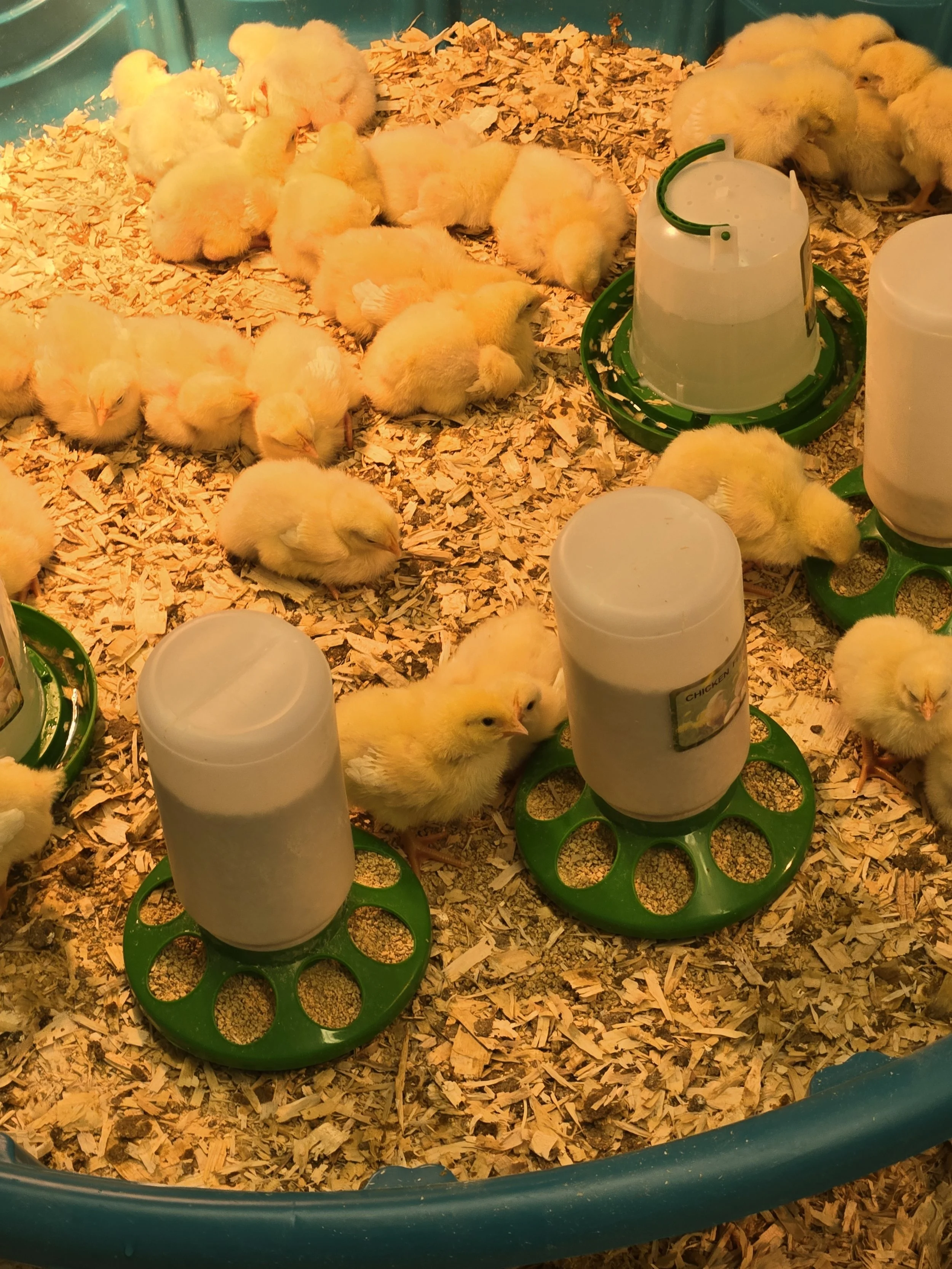
Development of an ascarid model in poultry hosts. A critical hurdle in ascarid research is the lack of tractable, cost-efficient hosts. Unlike Clade V nematodes, ascarids have no closely related free-living species to serve as a model. To fill this gap, we are developing the poultry ascarids Ascaridia galli, Ascaridia dissimilis, and Heterakis gallinarum as experimental systems, currently focused on in vitro assays, high-quality genomes, and methods for transgenesis and genome editing.
Discovery of novel mechanisms of drug resistance in ascarids. Recent studies of benzimidazole (BZ)-resistant ascarid populations have found that the beta-tubulin mutations linked to BZ resistance in strongylid nematodes are not present in ascarids. We aim to identify the genes behind BZ resistance in ascarids by combining in vivo infections and controlled genetic crosses with quantitative genetic mapping, eventually expanding to other anthelmintics. (Image represents a basic cross. Collins and Andersen, 2026)
Effects of ascarid infections and resistance in poultry production. Beyond the broader One Health focus of our ascarid research, we study how ascarid infections and drug resistance affect poultry production, both alone and in co-infection with other parasites such as the protozoan Histomonas meleagridis, and how to mitigate the resulting losses. Current directions include measuring the effects of single and co-infections and developing quantitative diagnostics to improve surveillance of ascarids in poultry.